Integrative and person-centered therapy shaped around the whole person.
A flexible, relational approach that makes room for your story, identity, body, values, relationships, survival strategies, and lived experience.
Integrative therapy means we are not limited to one rigid model. Person-centered therapy means you are not treated like a problem to solve from a distance. The work is shaped around who you are, what you are carrying, what feels useful, and what kind of support fits the actual life in front of us.
In therapy, this approach can draw from different evidence-informed tools while keeping the relationship, your context, your pace, and your whole person at the center of the work.

This approach may be useful if…
Integrative and person-centered therapy can be useful when you want therapy that is flexible, relational, whole-person, and responsive to your actual life instead of being forced into one rigid model.
You want therapy that feels like a real conversation, not a clinical script.
You want care that makes room for identity, relationships, grief, trauma, shame, anxiety, depression, body awareness, values, and lived experience.
You do not want to be reduced to a symptom, diagnosis, treatment plan, or single therapy model.
You want therapy that can be practical when skills are useful and reflective when deeper understanding is needed.
You value a collaborative relationship where your pace, goals, context, and lived experience matter.
You are carrying concerns that overlap and do not fit neatly into one category.
You want therapy that can adapt to you instead of asking you to adapt yourself to the therapy.
What integrative and person-centered therapy can support
Integrative and person-centered therapy can support the work of understanding your life as a whole, rather than forcing your story into one narrow model. This approach allows therapy to be practical, reflective, relational, skills-based, body-aware, or values-focused depending on what fits.

Therapy can make room for symptoms, identity, relationships, grief, shame, trauma, nervous system patterns, values, culture, desire, work, family, and the larger context of your life.

Some sessions may be practical and skills-focused. Others may be reflective, emotional, relational, or slower. The work can adjust to what is needed without losing direction.

Your identities, relationships, communities, body, history, values, and social context all matter. Therapy should not ask you to leave important parts of yourself outside the room.
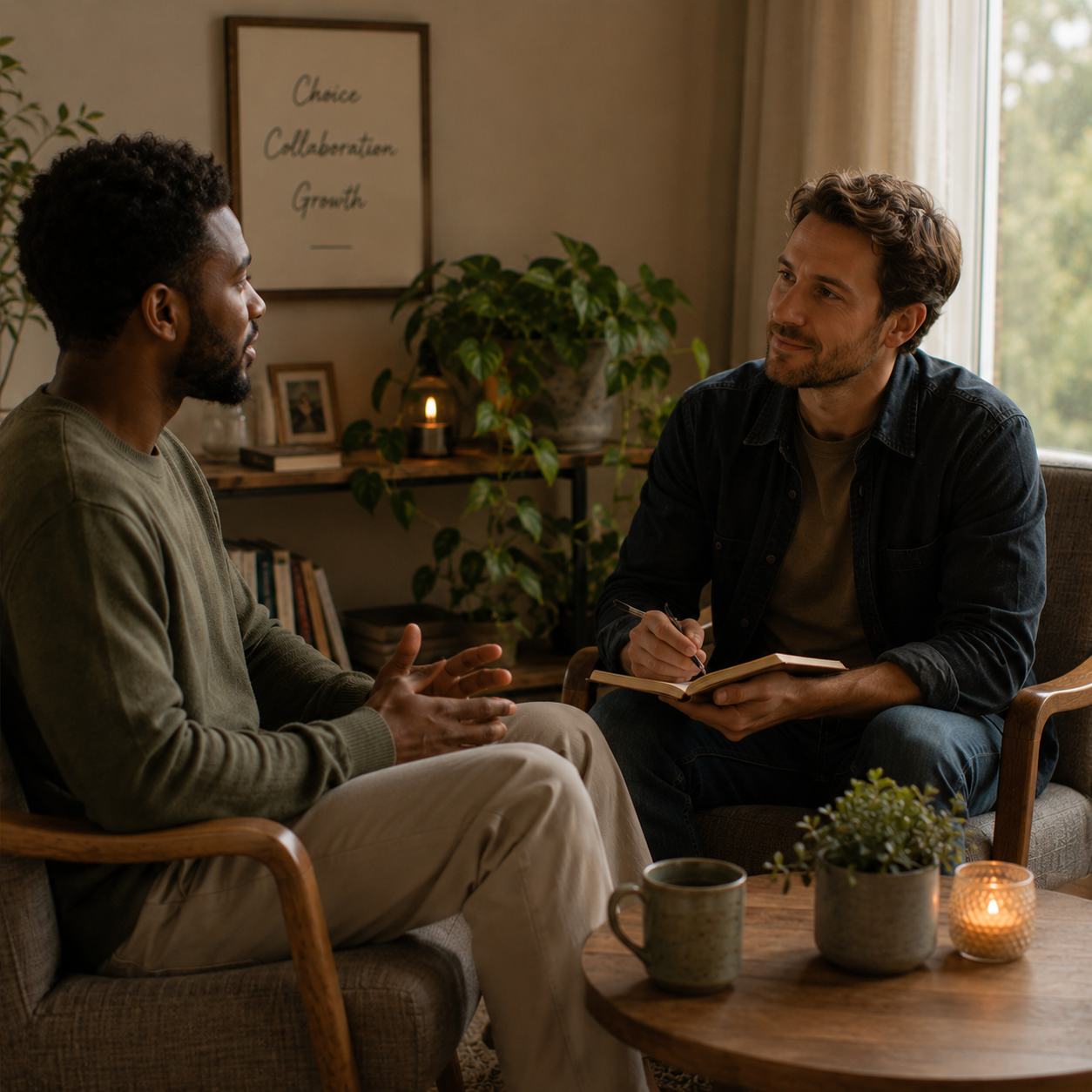
Therapy works best when it is collaborative. We can notice what feels useful, what does not, what needs more time, and what direction feels honest for you.

Many people do not arrive with one clean issue. Anxiety, depression, grief, burnout, identity, trauma, relationships, and shame often overlap in ways that deserve thoughtful attention.

Person-centered therapy values the relationship itself as part of the work. Care should feel respectful, collaborative, honest, and grounded in the reality of who you are.

Integrative therapy can include practical coping tools while also making room for the deeper patterns, roles, beliefs, grief, and survival strategies beneath the surface.

The goal is not to force you into a prescribed version of healing. It is to support more choice, self-trust, steadiness, connection, and room to live with less performance.
How integrative and person-centered therapy may show up in sessions
Shape the work around your actual life
We may draw from different therapy approaches depending on what feels useful, what you are carrying, and what kind of support fits the moment — without forcing your story into one rigid model.
Integrative and person-centered therapy can show up through conversation, reflection, skills, nervous system awareness, values work, emotional processing, and attention to the relationship between your story, your body, your identity, and your daily life.
Keep the relationship collaborative
We can notice together what is helping, what feels too fast, what needs more care, what questions matter, and what direction feels honest. Therapy should not require you to disappear inside the therapist’s agenda.
Hold both skills and deeper understanding
Some sessions may focus on practical tools for coping, communication, regulation, or boundaries. Others may make room for grief, identity, shame, survival patterns, relationships, and the deeper story underneath.
A note about integrative and person-centered therapy
Integrative and person-centered therapy is not about using random tools without direction.
This approach means therapy is shaped around the person in the room — your story, goals, identity, relationships, body, nervous system, culture, grief, shame, survival strategies, and lived experience.
Good integrative therapy can draw from different evidence-informed approaches while staying grounded, collaborative, and thoughtful. Person-centered care means you are not treated like a problem to solve from a distance. The work is responsive, relational, and shaped by what actually helps you make more room for honesty, choice, steadiness, and connection.
You do not have to fit yourself into one model before care can begin.
If this sounds like the support you are looking for, please review the access options and reach out when you are ready.